Suit-building solitaire
Spider Solitaire
Play Spider Solitaire online on GouziGouza and build complete king-to-ace suit runs by revealing hidden cards, protecting empty columns, and dealing from the stock only when the tableau is ready.
Spider Solitaire is a deeper, more tactical solitaire card game built around long descending sequences. Instead of racing to four foundations at the top of the screen, you work inside the tableau itself, sorting cards into complete king-to-ace runs. When a full same-suit sequence is completed, it leaves the table and opens space for the next part of the puzzle.
GouziGouza Spider Solitaire is designed for players who enjoy a slower and more strategic solitaire challenge. The game asks you to reveal hidden cards, build clean same-suit stacks, decide when to deal from the stock, and protect empty columns. Every deal is a small logistics puzzle: how do you turn disorder into complete suits without running out of moves?
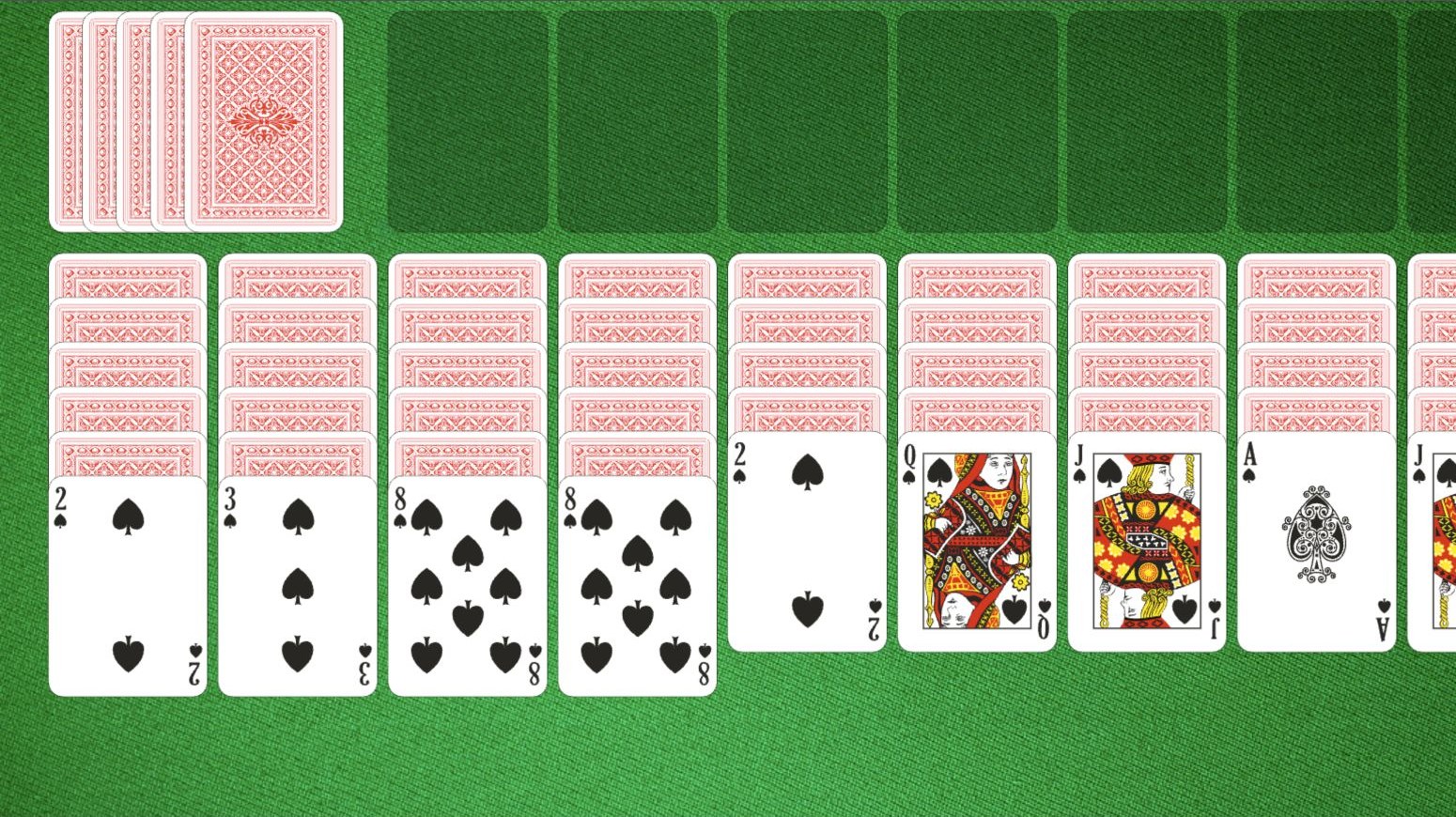
Goal
The goal is to remove all cards by building complete descending sequences from king to ace in the same suit. A finished run contains king, queen, jack, ten, nine, eight, seven, six, five, four, three, two, and ace. Once complete, the run is cleared from the tableau.
Winning requires both progress and discipline. You need to uncover face-down cards, but you also need to avoid mixed stacks that become impossible to separate later. The best Spider positions contain open columns, visible cards, and several partially built same-suit sequences.
How to Play Spider Solitaire
Move a face-up card, or a valid ordered run, onto a card that is one rank higher. For example, a seven can go on an eight, and a queen can go on a king. Same-suit runs are best because they can eventually become removable sequences.
When you move the last face-up card away from a column that still contains face-down cards, the next hidden card turns over. Revealing cards is a major source of progress. A move that uncovers a card is often stronger than a move that merely makes the visible layout look cleaner.
Stock Deals and Difficulty
The stock adds a new row of cards to the tableau. A stock deal can create new opportunities, but it can also bury carefully arranged stacks under mismatched cards. Before dealing, organize as much as possible, clear any complete runs, and use empty columns to untangle mixed stacks.
Many Spider versions support difficulty levels based on the number of suits. One-suit Spider is friendlier because every descending sequence is naturally same-suit. Two-suit and four-suit Spider require more planning, since mixed sequences can help temporarily but do not clear until they are rebuilt into a single suit.
Strategy Tips
The most important Spider strategy is to create empty columns. An empty column lets you move cards out of the way, split mixed stacks, and rebuild same-suit runs. If you have a choice between a move that simply extends a sequence and a move that creates an empty column, the empty column is often the better long-term option.
Same-suit building should be your default plan. Mixed descending stacks can be useful as temporary storage, but they are not finishable. Whenever possible, place spades on spades, hearts on hearts, diamonds on diamonds, and clubs on clubs. Clean same-suit runs are easier to move, easier to extend, and much closer to clearing.
Use a simple review routine before each stock deal. First, check whether any face-down card can be revealed. Next, check whether an empty column can be created or preserved. Then look for mixed stacks that can be separated into cleaner same-suit groups. This short pause prevents many avoidable losses because it turns the stock from a desperate reset into a planned next phase.
Do not deal from the stock just because you are impatient. A new row increases complexity across every column. If there are face-down cards you can reveal, empty columns you can preserve, or sequences you can clean up, do that first. A careful deal after preparation is much easier to solve than a panic deal into a cluttered tableau.
Common Mistakes
Beginners often build the longest possible descending stack without caring about suits. This can look good for a few turns, then become a knot that prevents completion. Another mistake is filling an empty column immediately with a card that has no plan. Empty columns are rare tools; use them to reorganize, not just to store.
A third mistake is ignoring low cards. Aces and twos can become blockers if they are placed under unrelated cards. Since complete sequences end with an ace, protecting access to low cards is essential.
FAQ
What is the easiest Spider Solitaire difficulty?
One-suit Spider is the easiest because every descending stack also matches by suit. More suits create more mixed stacks and make clearing complete runs much harder.
When should I deal new cards?
Deal after you have made all useful organizing moves. Try to reveal hidden cards, clear finished runs, and preserve empty columns before bringing in a new row from the stock.
Related Games
If you like Spider, try FreeCell for a more open planning puzzle, Klondike for classic solitaire rhythm, and Scorpion for a stricter same-suit tableau challenge.