Tile matching puzzle
Mahjong Solitaire
Match open tiles, uncover the layered turtle layout, and clear the board in GouziGouza Mahjong Solitaire. Learn which pairs are safe, which tiles are blocked, and how to avoid trapping the board.
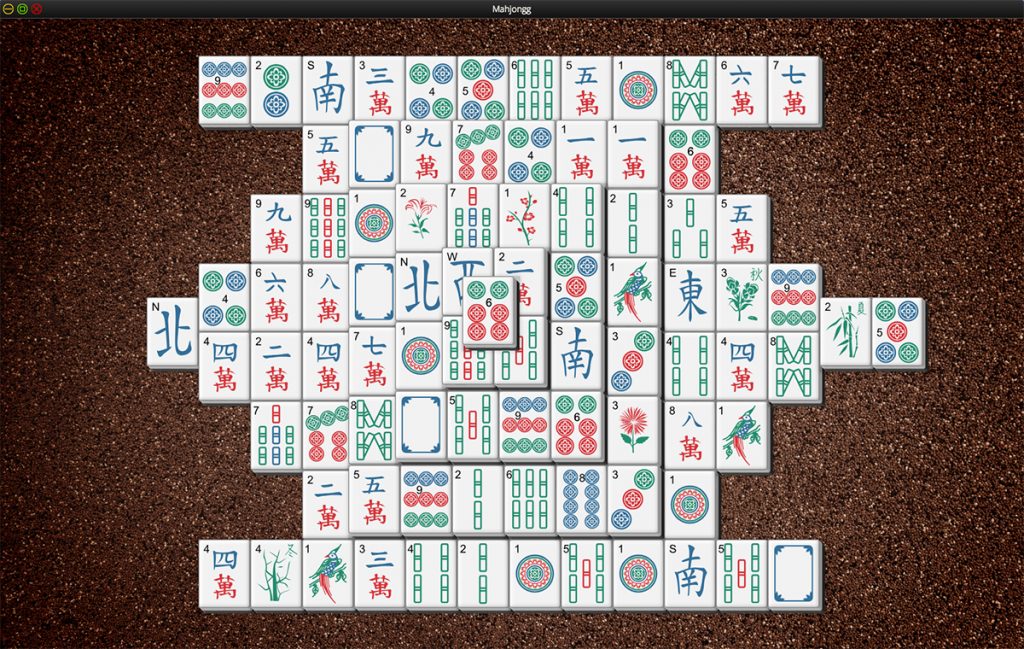
Mahjong Solitaire is a single-player tile matching game. Unlike four-player Mahjong, this version is a puzzle about reading a stacked layout and removing pairs in an order that keeps the board alive. GouziGouza uses the familiar turtle-style arrangement: tiles are layered, some are free, and many are blocked until other tiles are removed.
The basic rule is easy: match two available tiles with the same symbol. The interesting part is deciding which available pair should be removed first. Some pairs open many hidden tiles; others remove only a harmless edge tile. A good Mahjong Solitaire player looks beyond the first match and asks what the board will look like after the pair disappears.
Goal
The goal is to remove every tile from the board. You remove tiles by selecting matching open pairs. Most series require identical tiles: bamboo matches bamboo, dot matches dot, symbol matches symbol, dragon matches dragon, and wind matches wind. Flowers and seasons are special: any flower can match any other flower, and any season can match any other season.
A board can become blocked if the wrong pairs are removed early. Clearing the easy pairs is satisfying, but the real objective is to keep enough matching possibilities available until the deepest tiles are uncovered.
What Counts as an Open Tile?
A tile is open when no tile sits on top of it and at least one horizontal side is free. In practical terms, a tile must be able to slide left or right out of the layout. If both sides are blocked, it cannot be selected even if you can see its face clearly. If another tile partially covers it from above, it is also blocked.
This open-tile rule is the heart of Mahjong Solitaire strategy. You are not just matching pictures; you are changing the physical shape of the stack. Removing a pair from the top can reveal tiles underneath. Removing a pair from the edge can open a lane. Removing the wrong pair can leave a matching tile trapped under a layer you can no longer reach.
Tile Series
GouziGouza Mahjong Solitaire uses the traditional-looking tile families players expect. The numbered bamboo, dot, and symbol series each contain nine distinct ranks. Dragon tiles include red, green, and white dragons. Wind tiles include east, south, west, and north. Flowers and seasons are bonus-style series where different members of the same family can match each other.



How to Play
Start by scanning the open edges and the upper layers. Look for pairs where removing them exposes new tiles. A pair near the top of the stack is often more valuable than a pair on a flat outer edge, because upper tiles can block several hidden tiles below them. If two matches are available for the same tile, choose the one that opens the most structure.
When selecting flowers and seasons, remember that they match by family rather than by identical artwork. This can rescue a board when exact pairs are scarce. Do not waste those flexible matches too early if one of them is helping keep a difficult side open.
Strategy Tips
Prioritize tiles that block many other tiles. In the turtle layout, high central tiles and long horizontal blockers are often important. Removing them can reveal several new faces and create new matches. Edge tiles are useful too, but an edge tile that opens only one harmless tile may be less urgent than a central tile holding down a stack.
Watch duplicate pairs carefully. If three or four copies of a tile are visible, do not automatically match the first two you see. Pairing the wrong copies can leave the remaining two trapped on opposite sides of the layout. When possible, match the pair that frees the most tiles or protects access to the other copies.
Slow down when the board looks easy. Mahjong Solitaire often gives many obvious pairs early, then becomes difficult because earlier removals were not balanced. Try to open both sides of the layout, reveal top layers, and avoid stripping one side completely while the other remains locked.
Common Mistakes
The most common mistake is matching from the outside inward without checking the top. Outer matches are tempting, but they may not reveal enough new tiles. Another mistake is using flexible flower or season matches too casually. Since those tiles can pair with several partners, they are valuable tools for solving awkward positions.
Players also ignore blocked duplicates. If a tile has one open copy and two blocked copies, the open copy may need to wait. Matching it too soon could strand the later copies. A little patience often keeps the board solvable.
Related Games
If you like Mahjong Solitaire, try other GouziGouza puzzle games with clear boards and careful sequencing. Lines rewards spatial planning, Bubbles rewards shot setup and color matching, and FreeCell offers a card-based puzzle where every card is visible from the start.