Abstract strategy
Tic Tackle
Move pieces around a small board and line up three before your opponent. Tic Tackle looks simple, but every move changes the lanes, blocks, and threats available on the next turn.
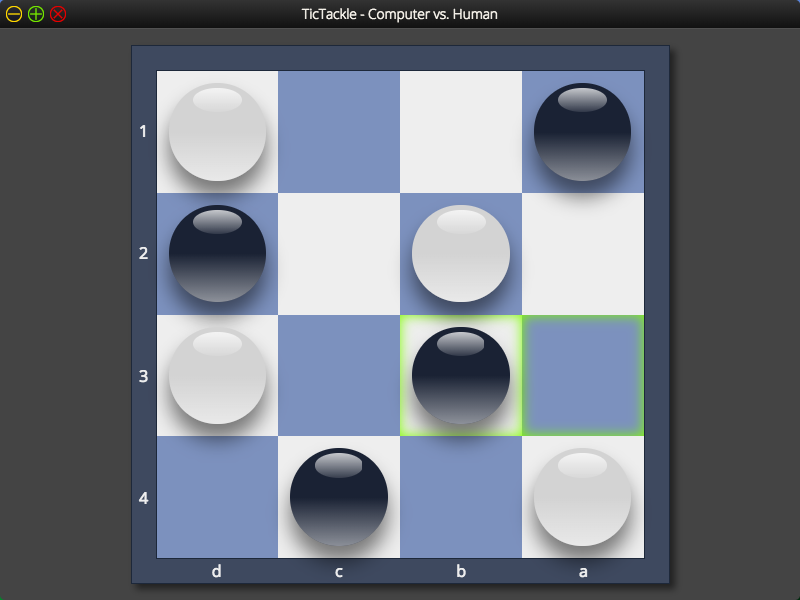
Tic Tackle is a compact abstract strategy game on GouziGouza. The goal sounds familiar: align three of your pieces horizontally, vertically, or diagonally. The twist is that the pieces are already on the board and must move. That changes the feel completely. Instead of placing marks like tic-tac-toe, you create threats by repositioning pieces, blocking your opponent, and controlling the few squares that matter most.
Because the board is small, every move is visible and every tempo matters. A move can attack, defend, open a diagonal, or accidentally let the opponent create an immediate line. Tic Tackle is quick enough for a short browser session, but it rewards the same habits as deeper board games: look for threats, ask what your opponent wants, and avoid moves that only solve the current turn while losing the next one.
Goal
The goal is to align three of your pieces in one straight line before your opponent does. The line may be horizontal, vertical, or diagonal. Since both players are trying to create the same pattern, every move should be judged by two questions: does it make my own line more likely, and does it stop the opponent’s strongest line?
Tic Tackle is won by coordination, not by collecting pieces. You already have the material you need. The puzzle is to move those pieces into a shape that cannot be stopped.
How to Play
Each side has four pieces. Black begins the game. On your turn, choose one of your pieces and move it one square horizontally or vertically. Diagonal movement is not allowed, even though diagonal lines can win the game. This difference between movement and scoring is what makes the game interesting: a piece may need several turns to reach the diagonal it wants.
A piece cannot simply jump to any square. The one-square movement rule creates traffic. Your own pieces can block each other, and the opponent can occupy key squares that force you to take a slower route. A good move often improves a line while keeping your pieces flexible enough to respond next turn.
Threats and Blocks
A threat is any position where one more move could complete a line of three. If your opponent creates a direct threat, you usually need to block it immediately. But Tic Tackle also has quieter threats: a move that places a piece in the center, opens two possible lines, or forces the opponent to defend while you prepare another direction.
The strongest positions create more than one threat at once. If one move threatens a row and a diagonal, the opponent may be unable to stop both. This is the same strategic idea found in many classic abstract games: make your opponent answer one problem while another problem becomes decisive.
Strategy Tips
Control the center when you can. Central squares usually connect to more possible lines than edge squares, so a piece near the center can switch plans more easily. That does not mean every center move is best, but it does mean you should notice when the center is open or when the opponent is using it to create multiple threats.
Do not chase one line blindly. If all your pieces lean toward a single row, the opponent may block it and leave you with no backup. Try to keep at least two useful patterns alive. A diagonal threat combined with a horizontal threat is much harder to defend than a single obvious row.
Before moving, inspect the square your piece leaves behind. Sometimes moving away from a defensive square gives the opponent an immediate win. In a small game, vacating a square can matter as much as occupying a new one.
Playing Against the Computer
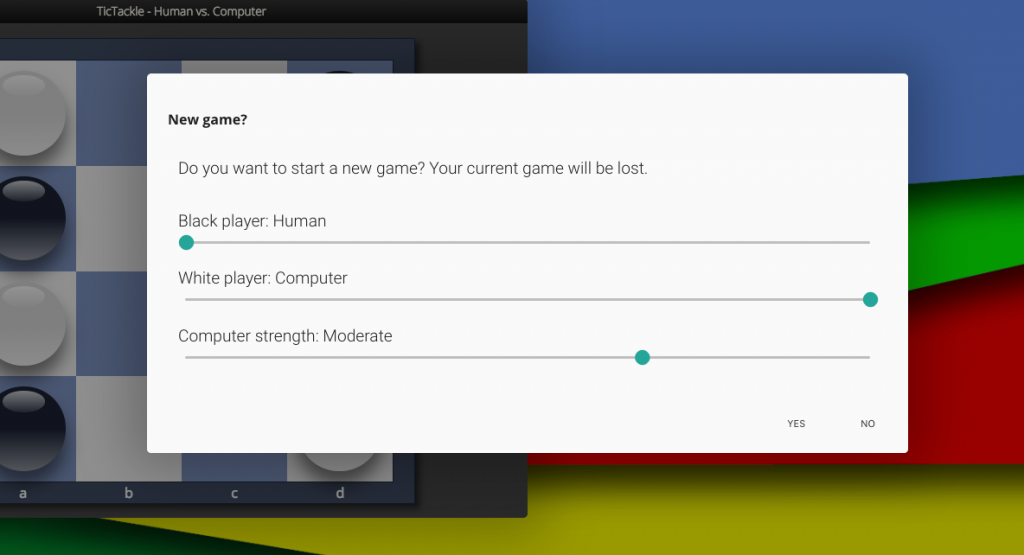
GouziGouza lets you start a new Tic Tackle game and choose player settings. You can play against the computer, set both players as human for a local two-player game, or adjust the computer strength. Easier levels are useful for learning patterns. Stronger levels punish loose moves and make you think more carefully about forced threats.
Common Mistakes
The first common mistake is moving only for attack and forgetting defense. If the opponent already has two pieces aligned, check whether your move allows an immediate third. The second mistake is moving a piece into a corner with no plan. Corners can be useful for diagonals, but a trapped corner piece may take too long to rejoin the action.
Another mistake is assuming the game is solved because it is small. Small games can be tactically sharp. Since there are fewer squares, threats arrive quickly, and a single careless move can decide the result.
Related Games
If you like Tic Tackle, try GouziGouza’s other strategy games. Chess offers a much deeper tactical board, while the Royal Game of Ur mixes race-game decisions with dice luck. Lines is a puzzle rather than a duel, but it shares the same idea of planning movement through limited space.